Field Notes
Safe Distance Is Part of the Story
A responsible caption can explain how an image was made without crowding wildlife.
AI-assisted editorial draft · human editor pending ·
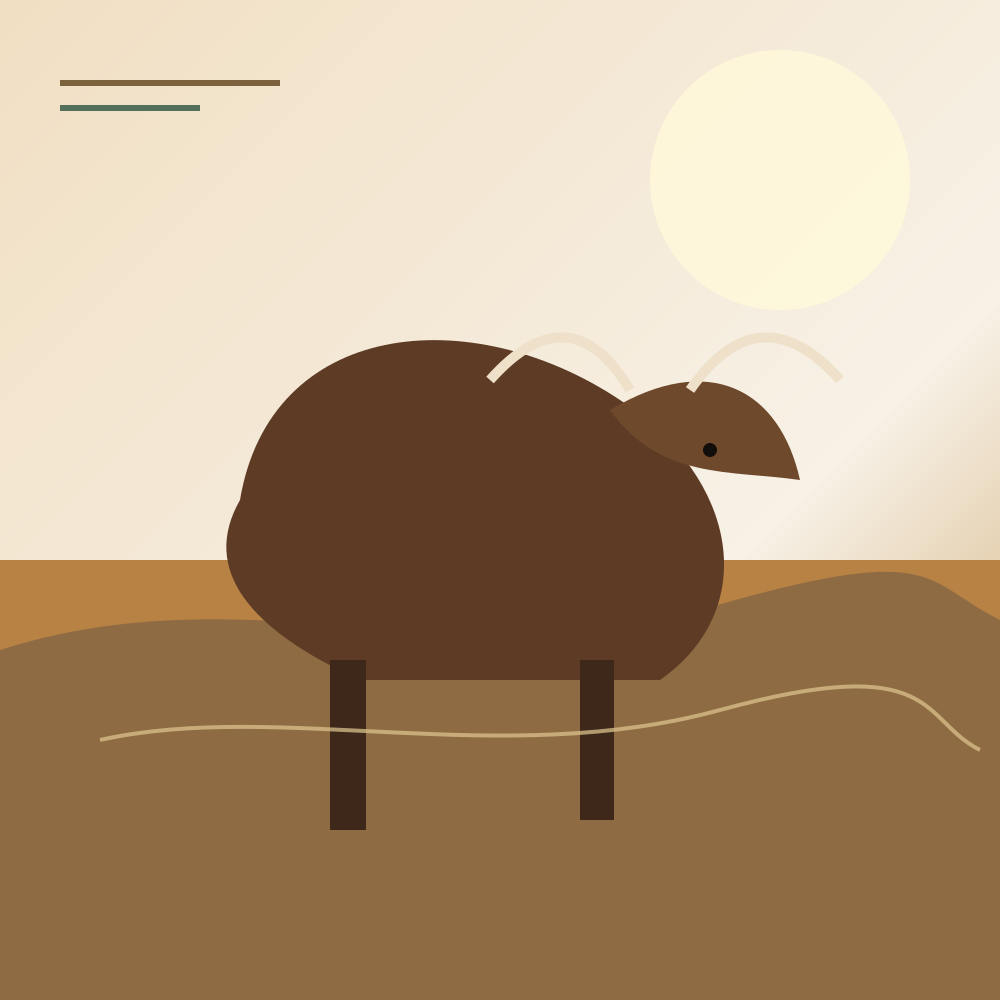
Safe Distance Is Part of the Story starts from a simple editorial rule: describe what can be seen, then explain the design decision, then cite a source when the point moves into factual territory. The strongest field image often begins with distance. A large animal, a low horizon and a long stretch of grass can say more than a close dramatic crop.
Look for the first readable shape
The first shape gives the reader a route into the subject. In Plains & Buffalo Journal, that may be a shoreline edge, a divine attribute, a bison silhouette or a bright dessert form. The test is whether the idea survives before small details arrive.
Bison writing should stay careful with names, behavior and conservation claims. Public education sources help keep a nature journal from becoming folklore dressed as fact.
Add detail only where it helps
Detail should support the main reading rather than compete with it. A highlight, texture mark, label or background element works best when it clarifies scale, material or direction.
This is why the page uses clear captions and source notes. The image can inspire curiosity, but it does not become evidence merely because it looks convincing.
Keep context visible
Context includes place, season, source, production method and the limits of what is known. Removing that context may make a page simpler, but it also makes the claim weaker.
Responsible viewing is part of the story. Captions should not imply unsafe proximity, staged behavior or certainty that the image itself cannot support.
Write the caption like a record
A strong caption names the image type, the subject, and the uncertainty. If an illustration is original and contemporary, it should say so. If a source supports a historical or scientific point, the exact source should appear near the claim.
That practice makes the article easier for a future editor to check, revise and publish under a verified owner.
Working takeaway
Use safe distance is part of the story as a close-looking exercise: start with visible form, keep the context attached and avoid claims the page cannot support.
Sources and scope
These references support the educational framework. They do not endorse this publication or its illustrations.
- National Park ServiceBison Bellows ↗
Public education articles about North American bison behavior, ecology and conservation.
- Smithsonian National ZooAmerican Bison ↗
Species profile and conservation context for American bison.
- Library of CongressRights and Reproductions ↗
General reminder that public access and reuse permission are separate questions.